
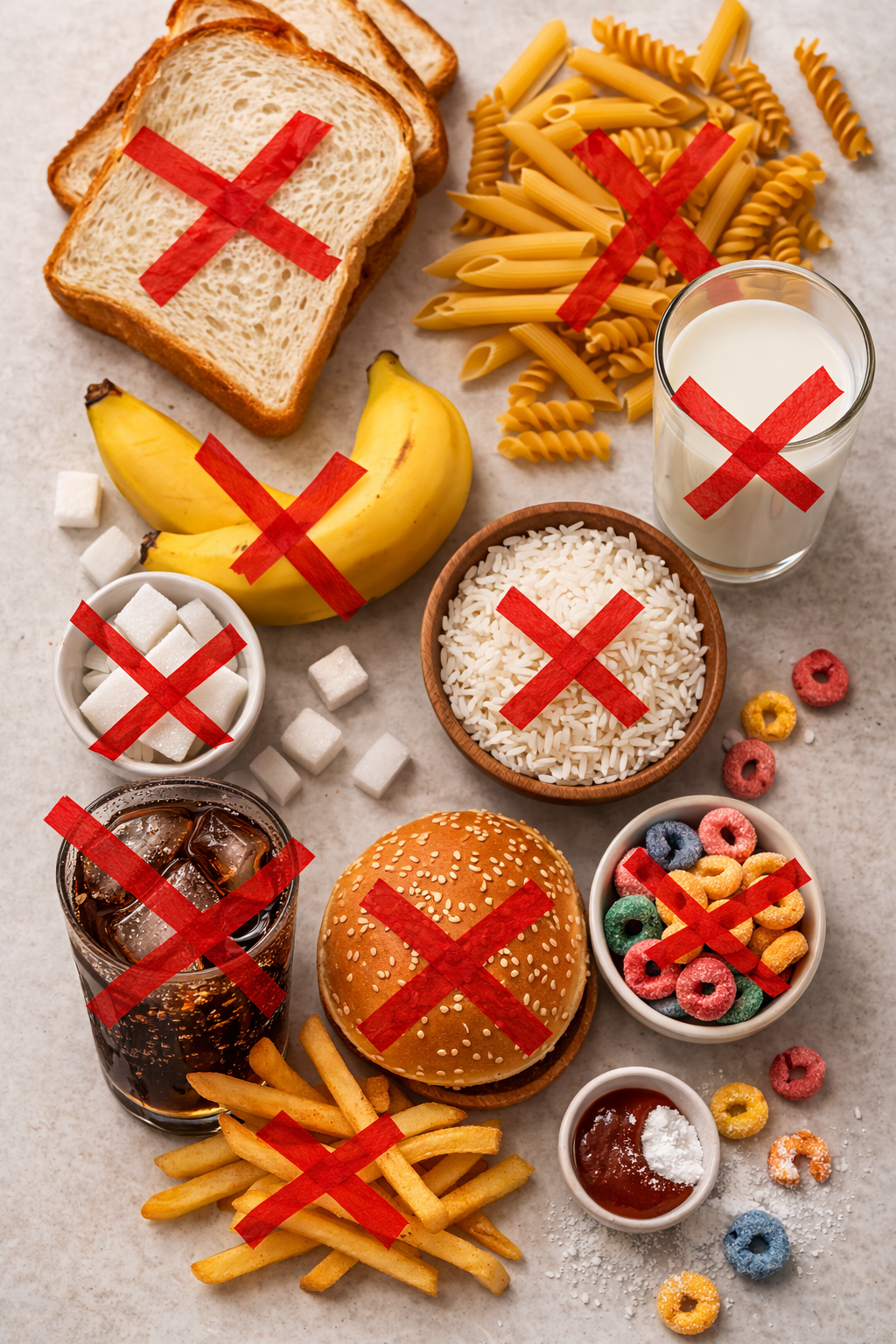
This guide covers the 10 Foods to Avoid on Keto Diet in 2026 so you can stay in ketosis and avoid common high-carb mistakes.
Many everyday foods — even those considered “healthy” — can contain enough carbs to push you out of ketosis.
Because most keto plans limit carbs to 20–30g per day, knowing what to avoid is essential if you want consistent fat-burning results.
Even small amounts of hidden carbs can slow or temporarily stop ketosis — especially if you exceed 30g of carbs per day.
Why Some “Healthy” Foods to Avoid on Keto Can Kick You Out of Ketosis
Keto works by shifting your body into a fat-burning state called ketosis.
To stay in ketosis, your carbohydrate intake must remain consistently low — typically under 20–30 grams per day.
The challenge is that many foods labeled as “healthy” are still high in carbohydrates. Whole grains, fruit, low-fat dairy, and even certain vegetables can contain enough carbs to exceed your daily limit in a single serving.
Unlike traditional low-sugar diets, keto is a metabolic strategy. Even moderate amounts of hidden carbs can raise blood sugar, increase insulin levels, and temporarily stop fat burning.
Below is the complete breakdown of the 10 Foods to Avoid on Keto Diet in 2026, including smart low-carb swaps for each category.
Top 10 Foods to Avoid on Keto
Below are the most common high-carb foods that can quickly push you out of ketosis.
Even small portions can exceed your daily carb limit if you’re not paying attention.
Bread, Buns, Wraps
Bread, sandwich buns, tortillas, and wraps are among the highest-carb foods in a typical diet and can quickly disrupt ketosis on a ketogenic diet.. Even “whole grain,” “multigrain,” or “gluten-free” versions are still primarily made from flour, which is rich in carbohydrates.
One slice of regular bread contains around 12–15 grams of carbs. That means a simple sandwich can easily exceed your entire daily keto carb limit of 20–30 grams.
Typical carb counts:
- 1 slice white bread — 12–15g carbs
- 1 hamburger bun — 20–25g carbs
- 1 flour tortilla — 18–30g carbs
Refined flour products have a high glycemic impact, meaning they are quickly broken down into glucose. This rapid rise in blood sugar can increase insulin levels, making it harder for the body to remain in ketosis.
Because keto requires consistently low carbohydrate intake to maintain ketosis, bread-based products can quickly stop fat burning and spike blood sugar levels.
Better Keto Alternatives:
- Almond flour bread
- Coconut flour flatbread
- Lettuce wraps
- Cloud bread
Pasta and Noodles
Pasta, spaghetti, macaroni, and most traditional noodles are almost entirely made from refined wheat flour, making them one of the highest-carb foods in a standard diet and one of the main foods to avoid on keto.. Even “whole grain” pasta remains too high in carbohydrates for a ketogenic diet and can quickly push you out of ketosis.
One cup of cooked pasta contains approximately 40–50 grams of carbs, which already exceeds the typical daily keto limit of 20–30 grams. Even smaller portions can significantly impact blood sugar levels.
Typical Carb Counts:
- 1 cup cooked spaghetti — 42g carbs
- 1 cup cooked penne — 45g carbs
- 1 cup ramen noodles — 52g carbs
Refined wheat products are rapidly broken down into glucose, leading to a spike in blood sugar and insulin. Because keto depends on maintaining consistently low carbohydrate intake, pasta-based meals can temporarily stop fat burning and interrupt ketosis.
Better Keto Alternatives:
- Zucchini noodles (zoodles)
- Shirataki noodles
- Cabbage noodles
- Spaghetti squash
Rice and Grains
White rice, brown rice, oatmeal, quinoa, and buckwheat are often marketed as healthy staples, but they are highly concentrated sources of carbohydrates. Even whole-grain options remain too high in carbs to fit comfortably into a ketogenic diet and can quickly push you out of ketosis.
One cup of cooked white rice contains approximately 45 grams of carbohydrates, while oatmeal provides around 27 grams per cup. These amounts can exceed or nearly reach the typical daily keto limit of 20–30 grams in a single serving.
Typical Carb Counts:
- 1 cup cooked white rice — 45g carbs
- 1 cup cooked brown rice — 44g carbs
- 1 cup cooked oatmeal — 27g carbs
- 1 cup cooked quinoa — 39g carbs
Grain-based foods are rapidly broken down into glucose, leading to an increase in blood sugar and insulin levels. Because keto relies on maintaining consistently low carbohydrate intake, rice and grain-heavy meals can interrupt fat burning and make it difficult to stay in ketosis.
Better Keto Alternatives:
- Cauliflower rice
- Chia seed porridge
- Flax-based keto porridge
- Hemp seed “grain” bowls
High-Sugar Fruits
While fruit is often considered healthy, many varieties are high in natural sugars that can quickly add up on a ketogenic diet. Bananas, grapes, apples, and mangoes contain significant amounts of carbohydrates and can push you out of ketosis if eaten in regular portions.
For example, one medium banana contains around 27 grams of carbs, while one cup of grapes provides approximately 26 grams. Even a medium apple has about 25 grams of carbohydrates — close to or exceeding the typical daily keto limit of 20–30 grams.
Typical Carb Counts:
- 1 medium banana — 27g carbs
- 1 medium apple — 25g carbs
- 1 cup grapes — 26g carbs
- 1 cup mango — 25g carbs
Although these sugars are natural, they still raise blood glucose and insulin levels. Because ketosis depends on keeping carbohydrate intake consistently low, high-sugar fruits can temporarily stop fat burning and make it harder to maintain ketosis.
Better Keto Alternatives:
- Raspberries
- Blackberries
- Strawberries (in moderation)
- Avocado (low in net carbs)
If you’re unsure what foods are keto-friendly, check out our complete guide below:
📌 What You Can Eat on Keto
Milk
Milk may seem harmless, but it naturally contains lactose — a form of sugar that can quickly add up on a ketogenic diet. Even though it’s not “sweet” like soda or juice, regular milk still provides a significant amount of carbohydrates per serving.
One cup (240 ml) of whole milk contains approximately 12 grams of carbs. That’s nearly half of a typical daily keto limit of 20–30 grams. Lower-fat milk options contain similar carb amounts, since removing fat does not reduce lactose content.
Typical Carb Counts:
- 1 cup whole milk — 12g carbs
- 1 cup 2% milk — 12g carbs
- 1 cup skim milk — 12–13g carbs
- 1 cup sweetened almond milk — 15g+ carbs
Because lactose converts into glucose in the body, milk can raise blood sugar and insulin levels. Since ketosis requires consistently low carbohydrate intake, drinking regular milk can slow or temporarily interrupt fat burning.
Better Keto Alternatives:
- Unsweetened almond milk
- Unsweetened coconut milk
- Heavy cream (in small amounts)
- Unsweetened macadamia milk
Starchy Vegetables
Starchy vegetables are often promoted as healthy, but many of them are too high in carbohydrates for a ketogenic diet. Unlike leafy greens and low-carb vegetables, starchy options such as potatoes, corn, and peas contain large amounts of digestible carbs that can quickly push you out of ketosis.
One medium potato contains around 37 grams of carbohydrates — already exceeding the typical daily keto limit of 20–30 grams. Even smaller portions of corn or sweet potatoes can significantly impact your daily carb intake.
Typical Carb Counts:
- 1 medium potato — 37g carbs
- 1 cup sweet potato — 27g carbs
- 1 cup corn — 27g carbs
- 1 cup green peas — 21g carbs
Starches are rapidly broken down into glucose, which raises blood sugar and insulin levels. Since ketosis depends on keeping carbohydrate intake consistently low, starchy vegetables can slow or temporarily stop fat burning.
Better Keto Alternatives:
- Cauliflower
- Broccoli
- Zucchini
- Spinach
- Asparagus
Sweets and Desserts
Most traditional sweets and desserts are loaded with sugar and refined flour, making them one of the fastest ways to exceed your daily carbohydrate limit on a ketogenic diet. Cakes, cookies, pastries, candy, and ice cream are typically high in both sugar and starch.
For example, a single slice of cake can contain 40–60 grams of carbohydrates, while a standard chocolate bar often provides 25–30 grams. Even small portions of dessert can quickly push you beyond the recommended 20–30 grams of carbs per day.
Typical Carb Counts:
- 1 slice chocolate cake — 50g carbs
- 1 glazed donut — 23–30g carbs
- 1 cup regular ice cream — 30g carbs
- 1 cup regular ice cream — 30g carbs
Refined sugar causes a rapid spike in blood glucose and insulin levels. Because ketosis depends on maintaining consistently low carbohydrate intake, sugary desserts can immediately interrupt fat burning and make it difficult to stay in ketosis.
Better Keto Alternatives:
- Sugar-free dark chocolate (85%+ cocoa)
- Keto fat bombs
- Chia pudding with unsweetened almond milk
- Greek yogurt (unsweetened, full-fat, in moderation)
Sugary Drinks
Sugary drinks are one of the quickest ways to exceed your daily carb limit on a ketogenic diet. Unlike solid foods, liquid sugar is absorbed rapidly, causing an immediate spike in blood glucose and insulin levels. Soda, fruit juice, sweetened coffee drinks, energy drinks, and sweet tea can contain more carbs than an entire keto day allows.
For example, one can of regular soda contains around 39 grams of carbohydrates — already above the typical 20–30 gram daily keto limit. Even 100% fruit juice, often considered “healthy,” can contain 25–35 grams of carbs per cup.
Typical Carb Counts:
- 1 can regular soda (12 oz) — 39g carbs
- 1 cup orange juice — 26g carbs
- 1 bottle sweetened iced tea — 30–40g carbs
- 1 flavored latte — 30g+ carbs
Liquid sugars are rapidly converted into glucose, leading to sharp insulin spikes. Because ketosis requires consistently low carbohydrate intake, sugary beverages can immediately interrupt fat burning and make it difficult to return to ketosis.
Better Keto Alternatives:
- Sparkling water (unsweetened)
- Herbal tea
- Electrolyte drinks without sugar
- Diet soda (in moderation)
Alcohol
Alcohol can be tricky on a ketogenic diet because its effects go beyond just carbohydrates. While some alcoholic beverages are high in sugar, even low-carb options can slow fat burning since the body prioritizes metabolizing alcohol before burning fat.
Many popular drinks contain significant amounts of carbohydrates. Beer and sweet cocktails are especially high in sugar, making them easy to overconsume on keto.
Typical Carb Counts:
- 1 regular beer (12 oz) — 12–15g carbs
- 1 light beer — 5–7g carbs
- 1 glass sweet wine — 8–12g carbs
- 1 margarita — 20g+ carbs
When you drink alcohol, your liver temporarily shifts its focus to processing ethanol instead of producing ketones. This can reduce ketone levels and pause fat burning, even if the drink itself is low in carbs. Excessive alcohol intake may also increase cravings and make it harder to stick to a ketogenic diet.
Better Keto Alternatives (Lower-Carb Options):
- Dry wine (in moderation)
- Champagne (brut)
- Vodka, gin, or tequila with soda water
- Zero-sugar mixers
Processed Foods
Many processed and packaged foods contain hidden sugars, refined starches, and unhealthy additives that can make staying in ketosis difficult. Even products labeled “low-fat,” “diet,” or “healthy” often include added sugars or fillers to improve taste and texture.
Items such as breakfast cereals, flavored yogurt, granola bars, packaged snacks, and ready-made meals can contain far more carbohydrates than expected. Because these foods are heavily processed, their ingredients are often rapidly digested and can quickly raise blood sugar levels.
Typical Carb Counts:
- 1 granola bar — 15–25g carbs
- 1 flavored yogurt cup — 18–24g carbs
- 1 cup breakfast cereal — 20–30g carbs
- 1 serving frozen meal — 30g+ carbs
Highly processed foods tend to combine refined carbohydrates with added sugars, leading to blood sugar spikes and increased insulin levels. Since a ketogenic diet depends on maintaining consistently low carbohydrate intake, regularly consuming processed foods can disrupt ketosis and slow fat loss progress.
Better Keto Alternatives:
- Whole, unprocessed meats
- Eggs
- Fresh vegetables
- Nuts and seeds (in moderation)
- Homemade keto snacks
📌 Top Beginner Mistakes on Keto
📍 Summary
Staying under 20–30 grams of carbs per day requires consistency and awareness. Many everyday foods — even those marketed as “healthy” — can contain enough carbohydrates to slow fat burning or temporarily interrupt ketosis.
By understanding which foods to limit and choosing smarter low-carb alternatives, you make keto sustainable instead of restrictive.
Keto isn’t about cutting everything out.
It’s about choosing foods that support stable energy, balanced blood sugar, and long-term metabolic health.
If you’d like visual examples, meal ideas, and easy low-carb swaps, you can explore our keto inspiration collection here → pinterest.com/Mealbase/
