
How Ketosis Works

πŸ” The metabolic shift without hype

When you significantly reduce carbohydrate intake, your body starts looking for another fuel source. Normally, glucose derived from carbs powers your cells. But when that supply dwindles, the liver kicks in and begins converting fat into molecules known as ketones. This process is called ketogenesis, and the resulting metabolic state is known as ketosis.
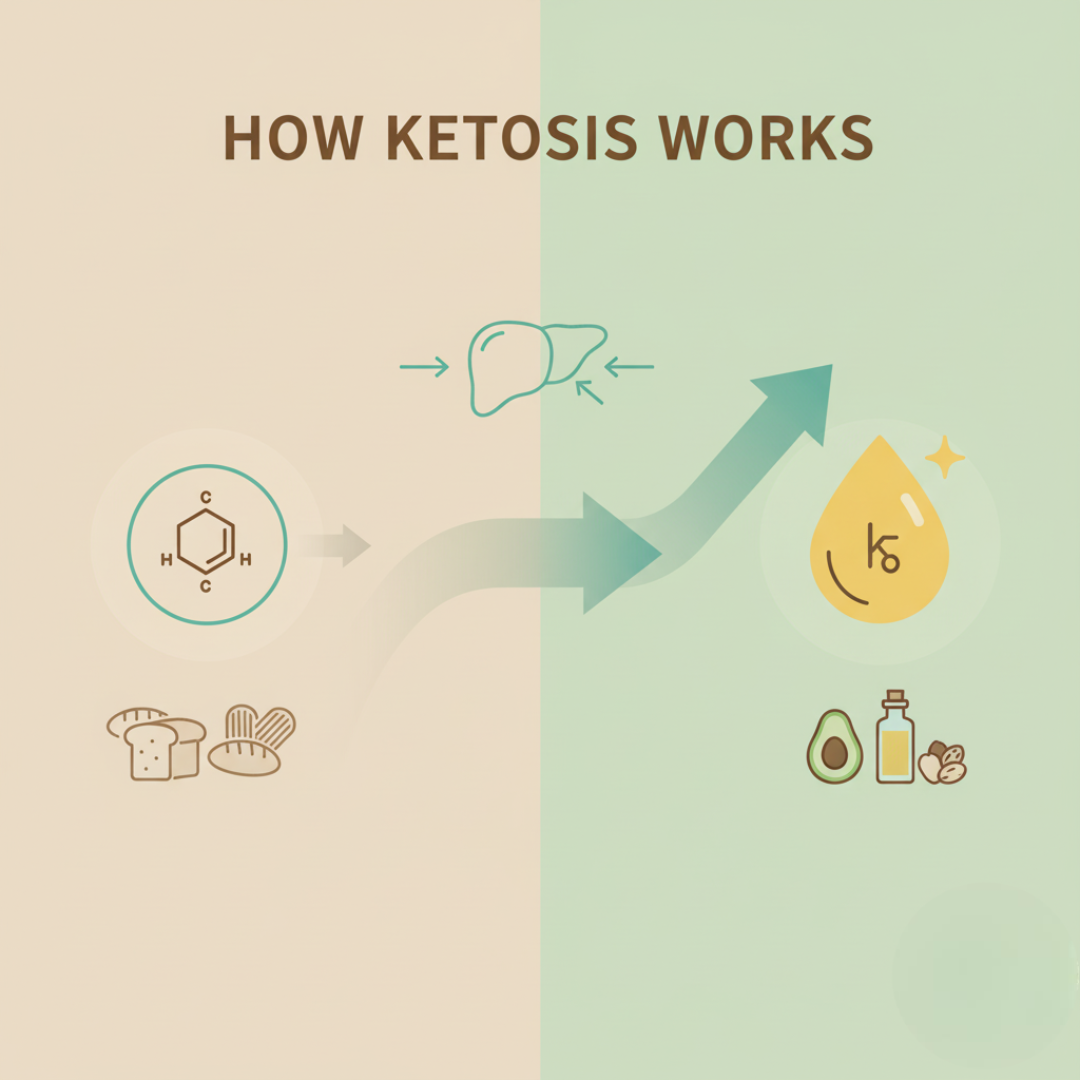
How Ketosis Works

🧠 The mechanics behind it

Once carbs are low enough, insulin levels drop, and your body becomes more comfortable burning stored fat. That fat is broken down into fatty acids, which the liver then converts into ketones β€” mainly acetoacetate, beta‑hydroxybutyrate (BHB), and acetone. These ketones circulate through your bloodstream and provide energy to your brain and muscles.Wikipedia+1

Unlike fatty acids, which most cells can use for fuel, only ketones can cross the blood‑brain barrier in meaningful amounts β€” which is why your brain can still function smoothly when carbs are low.

βš™οΈ Why this shift matters

Switching from glucose to fat for fuel isn’t just a dietary gimmick. It changes how your body behaves. Some of the effects people report:

More sustained energy (because fat supplies are more stable than carbs)

Reduced hunger and fewer cravings

A metabolic environment that may support fat loss and improved insulin sensitivity

Of course, results vary β€” and this isn’t a guarantee. But knowing why you feel different helps you stick with it longer.


🍴 How to support the shift

To help your body enter and stay in ketosis you need a few things aligned:

Carbohydrate intake needs to be low β€” typically under ~20‑50β€―g/day though it varies.

Sufficient fats are required to provide the energy your body needs.

Moderate protein β€” too much protein can be converted into glucose, which may hinder ketosis.

Hydration and electrolyte balance matter β€” as your glycogen stores drop, water and minerals like sodium, potassium, and magnesium are lost more rapidly.

Thinking of what to eat? Check out our food list: what you can and can’t eat.


πŸ“Œ What to keep in mind

The transition into ketosis might take 2‑4 days or more β€” depending on your metabolism, activity level, prior diet, and other factors.

During the adaptation phase you may feel tired, get headaches, or have symptoms known as β€œketo flu.” But this usually passes.

Ketosis is not the same as ketoacidosis β€” the dangerous condition often associated with uncontrolled typeβ€―1 diabetes.

Not every body reacts the same. Some may never reach deep ketosis, others might easily do so. The level of ketones alone doesn’t define success.


🧠 Next steps

Curious how the diet might fit your goals, or whether you should avoid it? Start with the essentials:

πŸ”— What Is Keto? β†’

πŸ”— Who Should Try Keto β€” and Who Should Avoid It β†’

πŸ”— What You Can and Can’t Eat on Keto

πŸ”— Top Beginner Mistakes β†’

How Ketosis Works

For more details on common keto mistakes and how to avoid them, see:
https://www.healthline.com/nutrition/keto-mistakes

Scroll to Top